
A Global Family with One Purpose
We are a global African family, rooted in different soils but nourished by the same dream: to see Africa’s children thrive. Our calling is not only to give, but to give strategically, to uplift through evidence and partnership.
Wherever we live, in Boston, London, Toronto, Nairobi, or Accra, the rhythm of Africa beats within us. As Africans in the diaspora, we understand that education is not just a personal achievement; it is a generational gift. It is what carried us forward, and it is what we now return to our communities with gratitude and intention.
That is the spirit behind Grow Against Poverty, a bridge between diaspora remittance and Kenyan classrooms, where wood shavings in New York translate into school attendance in Kenya.
From Workshop to Classroom: A Cross-Continental Partnership
In a quiet woodworking studio in upstate New York, artisan volunteer John Roccanova turns local hardwoods, walnut, cherry, mahogany, and oak, into bowls, platters, and toys. John is not of African descent, but has a long association with Africa. Each handcrafted piece is sold to fund education programs across Kenya through the Grow Against Poverty non-profit organization. But this is not a story of charity; it’s one of partnership.
In western Kenya, Hellen Mukanda, a dedicated teacher and local program leader for Grow Against Poverty, coordinates how those funds meet real needs in her community. Together, John and Hellen have built a relationship rooted in trust and purpose — proof that development is strongest when diaspora hands and local leadership work side by side.
“When the funds arrive,” Hellen says, “we don’t just see donations; we see friends across the ocean walking beside us in our work for the children.”
Grow Against Poverty in Action
Each year’s Crafts for a Cause sale transforms artisan craftsmanship into community-driven impact:
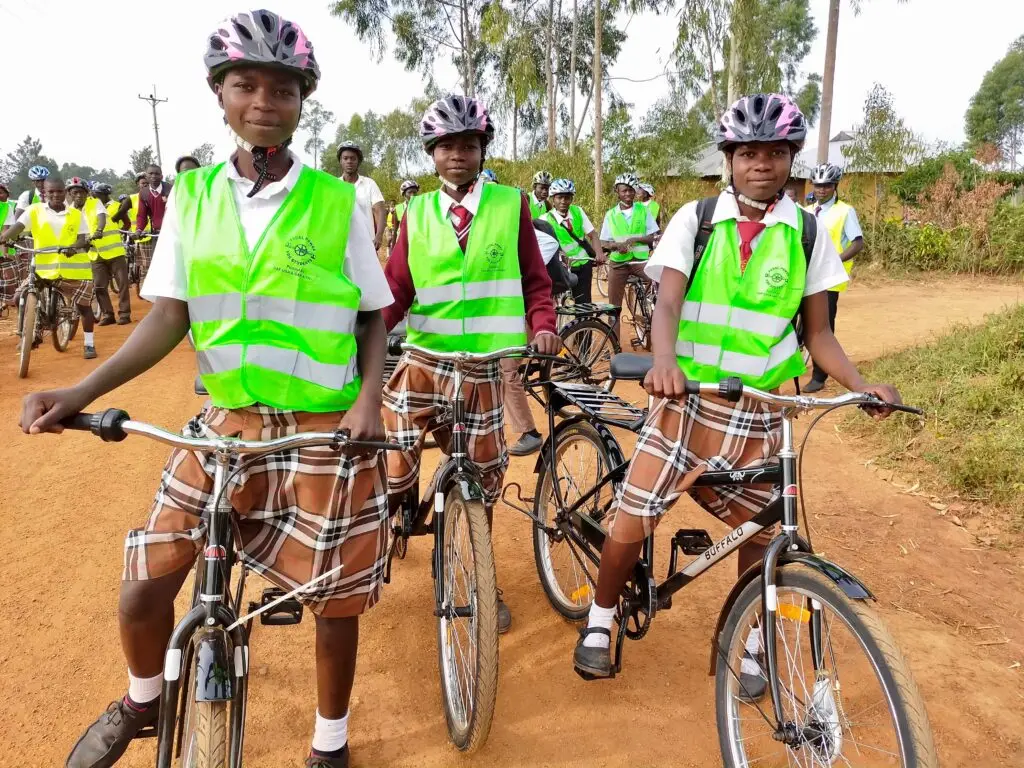
- Pedal Power for Education: 660 bicycles supplied to Kenyan high-school students, improving attendance and safety.
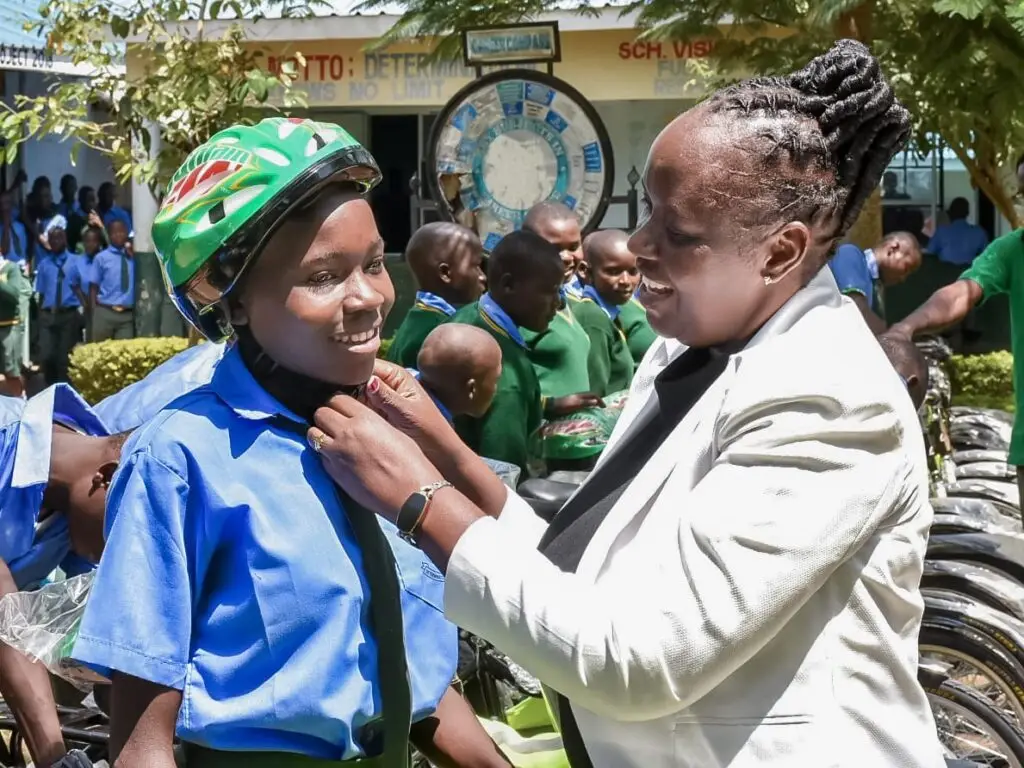
- Prevent Period Poverty: Construction of bathrooms and provision of menstrual supplies so girls don’t miss class.
- Green Fields: Organic school gardens providing nutritious meals and agricultural skills.
- Computers in Classrooms: Partnership with TechLit Africa, introducing digital literacy from lower grades upward.
Each program is coordinated locally by educators like Hellen Mukanda, ensuring that the diaspora’s generosity meets Kenya’s priorities, not assumptions.


The Evidence: Why These Interventions Work
Across rural Kenya, children often walk five miles or more each day to school. Long distances, safety concerns, and poverty keep many from attending regularly. Research confirms that bicycles can reduce commute times by up to 65 percent, boosting attendance and academic performance — especially for girls (World Bicycle Relief, 2019).
For adolescent girls, menstrual hygiene management remains another major barrier to consistent schooling. Studies show that access to sanitary products and private facilities significantly reduces absenteeism and dropout rates (Ballard Brief, 2024).
Nutrition is another factor. School gardens and feeding programs increase enrollment and concentration, creating healthier learners who stay in school longer (World Food Programme Kenya, 2020).
Join the Movement: Crafts for a Cause 2025
Support the mission and meet the people behind Grow Against Poverty at the upcoming Crafts for a Cause Sale.
Wood Crafts Sales Event:
Dates: November 8–9, 15–16, 22–23, 28–30
Location: Historic Irondale Schoolhouse, Main Street, Millerton, NY — along the Harlem Valley Rail Trail, across from Harney & Sons Teas.
Follow: Instagram @woodcrafts4acause
Give Online: https://www.globalgiving.org/donate/57691/grow-against-poverty/
Purchase a handcrafted piece, volunteer your time, or spread the word in your diaspora network. Every act strengthens a chain of impact that links classrooms in Kenya to communities worldwide. Each crafted bowl, each shared post, each contribution helps provide access to education.
The Power of Global African Giving
The African diaspora is vast and powerful. Remittances and philanthropy from Africans abroad surpassed $95 billion in 2024 (World Bank, 2025). Beyond money, we bring what scholars call social remittances — ideas, innovations, and partnerships that enrich both continents.
When we choose to give and get involved in social development models like Grow Against Poverty, we are not merely sending funds, we are actively contributing to the development efforts of the African continent.
“We must not only give generously, but give wisely,” one diaspora supporter reflects. “Our impact is greatest when it respects local leadership and aligns with what evidence shows truly helps children learn.”
Author
Emmanuel Owusu (The ADEA Community Coordinator)
This article was developed with editorial and research assistance from OpenAI’s GPT-5, under the direction of the author.
Sources & Further Reading
- World Bicycle Relief (2019): Why Bicycles for Education? https://worldbicyclerelief.org/wp-content/uploads/2019/09/wbr-why-bicycles-for-education.pdf
- Ballard Brief (2024): Menstrual Hygiene Management Among Adolescent Girls in Kenya. https://ballardbrief.byu.edu/issue-briefs/menstrual-hygiene-management-among-adolescent-girls-in-kenya
- World Food Programme (2020): Home-Grown School Meals in Kenya. https://www.wfpusa.org/news/school-meals-success-in-kenya/
- World Bank (2025): Remittances to Sub-Saharan Africa Data. https://data.worldbank.org/indicator/BX.TRF.PWKR.CD.DT?locations=ZG
- International Education Funders Group (2024): Spotlight on Education Philanthropy in Africa. https://iefg.org/wp-content/uploads/2024/11/DIGITAL-IEFG-Spotlight-Report-on-Education-Philanthropy-in-Africa-2024.pdf
Footnote:
Grow Against Poverty is a member of the African Diaspora Engaging Africa (ADEA) Community — an initiative dedicated to nurturing, supporting, and elevating self-directed social impact projects led by the 2.4 million African diaspora in the United States to advance the continent’s development. The ADEA community defines the African diaspora broadly, including anyone with ancestral ties to Africa or meaningful lived experience on the continent. The community, which began with a gathering at Boston University in 2019, now meets virtually every month for peer support and learning, exchanging expertise, strengthening partnerships, and mobilizing resources for Africa’s development. Learn more at https://adeacommunity.org/.