
Sub-Saharan Africa is home to the world’s largest, fastest-growing youth population, a demographic powerhouse poised to reshape the global economy. This generation is Africa’s undeniable future. Yet, a structural education gap is threatening to leave this immense potential on the table:
The Learning Gap: A staggering 80% of children across sub-Saharan Africa cannot read or perform basic math by age 10. Four out of every five children are in classrooms, but they are not learning the foundational skills required to participate in the 21st-century workforce.
The Teacher Bottleneck: The continent needs 15 million new teachers by 2030 just to keep pace with population growth. We simply cannot train them fast enough through traditional pipelines.
The Hidden Language Barrier: Millions of children are forced to learn foundational STEM concepts in colonial languages like French or English, languages they don’t speak at home. This double-cognitive load acts as a massive wall, confirming what research shows: children learn best in their mother tongue, especially in foundational years.
This is not just a humanitarian crisis; it’s the single most critical challenge we must conquer to unlock Africa’s $21 trillion economic potential and enable a generation to thrive on its own terms. Traditional education hasn’t just failed a generation; it’s been failing them in the wrong language and with systems that cannot scale. This is the moment to build something entirely new.
One Engineer’s Journey From Bamako to Boston—And Back
Mohamed Kanté understands this challenge personally.
Born and raised in Mali, Mohamed immigrated to the United States with limited resources and big ambitions. He began his education at a community college in Massachusetts, transferred to Northeastern University, and later became an electrical engineer. His career included work at Dell Technologies, where Fortune magazine later recognized him as a “Hero of the Fortune 500” for inventing an eye-controlled robotic feeding arm for people with disabilities.
Despite these achievements, Mohamed never lost sight of home. He remembered the brilliant young people in his neighborhood, full of curiosity and intelligence, whose opportunities were constrained, not by talent, but by access to quality education and supportive learning environments.
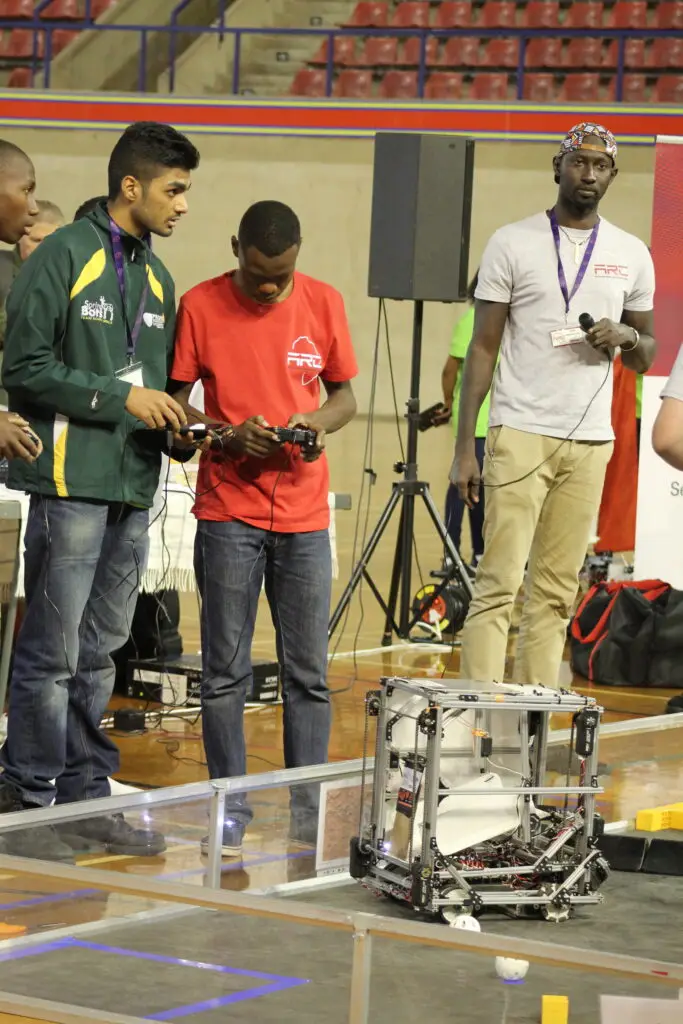
In 2014, he founded iNERDE (New Education for Radical Development) with a simple but bold vision: to rethink how education is delivered in African communities and to “put the cool back into being a nerd.” He started running summer STEM camps in Mali. In 2017, he pulled together a group of Malian teenagers who had never seen a robot before and coached them to compete at FIRST Global in Washington, D.C., the “Olympics of Robotics.”
Team Mali won the silver medal for Engineering Design, beating teams from 157 countries, many with far more resources.
That moment proved something important: African children don’t need charity. They need quality education to be the next great inventor, the next breakthrough scientist, the next leader who transforms the continent
The iNERDE Academy: A Teacher Multiplier Model
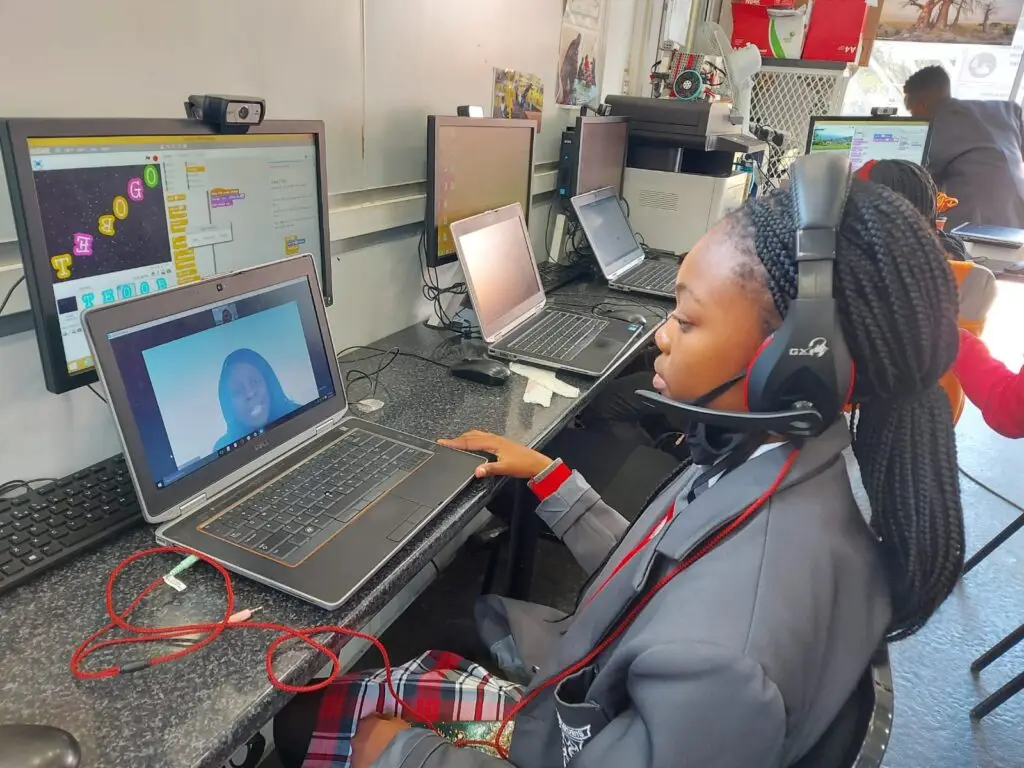
After more than a decade of hands-on experience, iNERDE is now launching the iNERDE Academy, an AI-enabled learning model designed to address Africa’s teacher shortage without waiting decades for new systems to catch up.
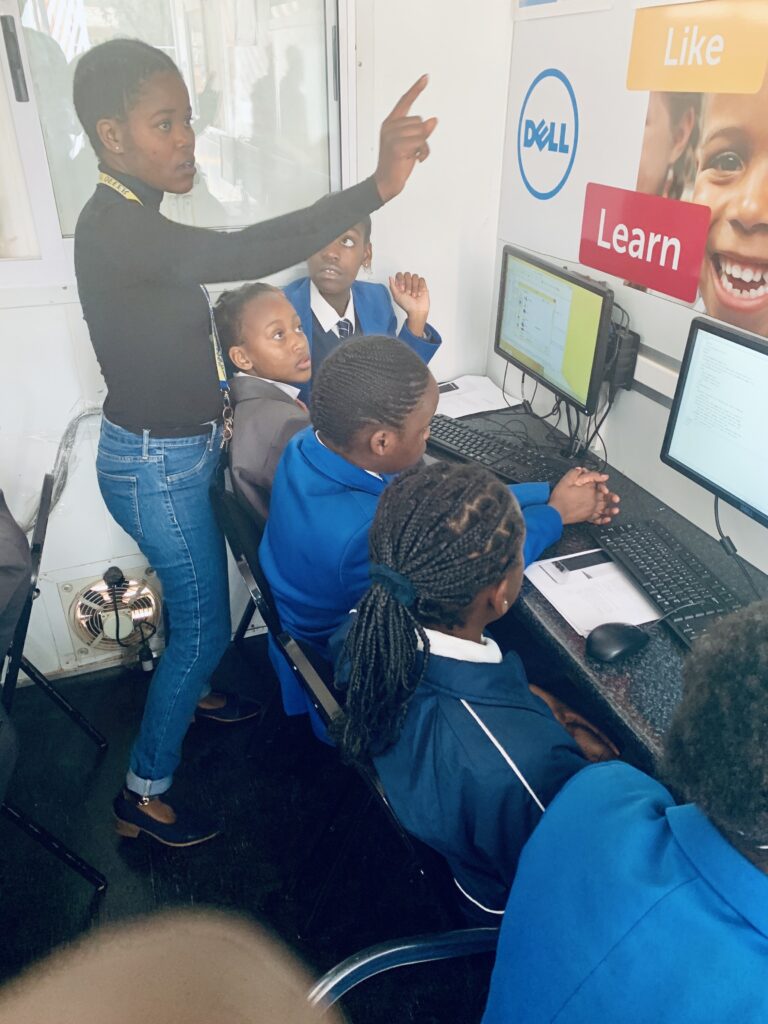
In addition to formally certified teachers, iNERDE Academy trains trusted community adults, parents, older siblings, university students, and other respected local figures to serve as Learning Facilitators. These facilitators are not expected to replace teachers. Instead, they provide structure, encouragement, discipline, and human connection.
They are supported by Sira, the iNERDE AI tutor family, a digital platform that delivers high-quality instructional content, teacher tools, and learning pathways developed with African educators. In this model:
- The human facilitator anchors learning in trust and community.
- The AI tutor provides consistent, scalable pedagogy.
Together, they create access to quality education at a scale traditional systems cannot reach alone.
Traditional model:
1 certified teacher → ~30 students (2–3 years of training)
iNERDE model:
1 facilitator + Sira → ~20 students across learning pods (2–3 weeks of training)
This approach, known as the Teacher Multiplier Model, allows communities to expand access to learning quickly, without sacrificing quality or cultural relevance.
The Pilot Phase: Learning With Communities
Before scaling, iNERDE is intentionally focusing on learning and refinement. iNERDE Academy is launching an initial pilot of five Learning Pods in Ghana, serving 50 students in Junior Secondary (Years 2–3) as they prepare for the Basic Education Certificate Examination (BECE). Ghana was selected for this phase due to its strong community-based education culture, clear national assessment benchmarks, and the presence of local partners ready to co-create the model.
Each Learning Pod will be led by a locally trusted facilitator who receives focused training and ongoing support. These facilitators work in partnership with Sira, combining human guidance with structured digital instruction.
The pilot has three core objectives:
- Refine the Sira AI tutor family to ensure content is pedagogically sound, culturally relevant, and responsive to how students learn in practice.
- Strengthen facilitator training to ensure community adults feel confident and supported in their roles.
- Measure student progress, not only through exam readiness, but also through confidence, engagement, and foundational STEM understanding.
This phase is not about rapid expansion. It is about accountability, learning, and building trust with communities.
A Moment for the African Diaspora
For members of the African diaspora, iNERDE Academy represents a choice. A choice to support education models that speak African languages, respect local leadership, and prepare young people for a technology-driven future.
Whether you are an educator, technologist, entrepreneur, parent, or mentor, there is a role to play in bold vision —from advising on curriculum and technology, to supporting pilot communities, to helping build bridges across borders.
Call to Action
We invite you to engage with iNERDE Academy in meaningful ways:
- Support the pilot phase and help strengthen community-based learning pods
- Serve as a mentor or advisor, contributing skills and insight
- Join upcoming conversations to learn more and connect with the iNERDE community
Your engagement helps turn possibility into preparation—and preparation into progress.
For more information and inquiries, please contact
- Mohammed Kente – mtkante@inerde.org
- Website: https://www.inerde.org/
Acknowledgments
The ADEA Community
This work reflects the values of diaspora-led, locally grounded development championed by the ADEA Community. It is part of a broader effort to elevate African solutions through collective learning, partnership, and visibility.
AI Acknowledgment
This article was developed with AI-assisted drafting under the author’s direction and reviewed to reflect an authentic African diaspora voice, lived experience, and respect for local leadership.
References & Further Reading
Education, Learning Poverty & Skills Gaps
- World Bank. (2022). The State of Global Learning Poverty: 2022 Update.
This report documents that approximately 80% of children in low- and middle-income countries cannot read and understand a simple text by age 10, with Sub-Saharan Africa most affected.https://www.worldbank.org/en/topic/education/publication/state-of-global-learning-poverty
- World Bank. (2020). The Human Capital Index 2020: Africa Edition.
Analyzes how education quality—not just years of schooling—drives productivity, lifetime earnings, and economic growth across African countries.https://www.worldbank.org/en/publication/human-capital
Teacher Shortages & System Capacity
- UNESCO Institute for Statistics. (2023). Teachers Needed for Sustainable Development Goal 4. Estimates that Sub-Saharan Africa will require approximately 15 million additional teachers by 2030 to achieve universal quality education.
https://uis.unesco.org/en/topic/teachers
- UNESCO. (2021). No Teachers, No Classrooms: State of the Teaching Profession in Sub-Saharan Africa. Examines teacher deployment, training bottlenecks, and the limits of traditional teacher pipelines.
https://unesdoc.unesco.org/ark:/48223/pf0000373986
Language of Instruction & Learning Outcomes
- UNESCO Global Education Monitoring Report. (2023). Technology in Education: A Tool on Whose Terms? Highlights evidence that children learn best in languages they understand, especially in early and foundational years, and cautions against one-size-fits-all digital solutions.
https://www.unesco.org/gem-report/en/technology
- World Bank. (2021). Learning in the Time of COVID-19: The Role of Language.
Demonstrates how instruction in unfamiliar languages compounds learning loss and inequity in low-resource settings.https://documents.worldbank.org/en/publication/documents-reports/documentdetail/099052521091010385
- Ball, J. (2014). Children Learn Better in Their Mother Tongue. Global Partnership for Education. Summarizes global evidence showing that mother-tongue instruction improves literacy, numeracy, and long-term learning outcomes.
https://www.globalpartnership.org/blog/children-learn-better-their-mother-tongue
Youth, Innovation & Economic Potential
- African Development Bank Group. (2022). Africa’s Demographic Dividend: Investing in Youth. Explores how education, skills, and innovation are critical to unlocking Africa’s long-term economic potential.
https://www.afdb.org/en/documents/africas-demographic-dividend
- McKinsey Global Institute. (2020). Lions on the Move II: Realizing the Potential of Africa’s Economies. Estimates Africa’s long-term economic potential—often cited in the $20+ trillion range—is dependent on workforce readiness and human capital development.
https://www.mckinsey.com/mgi/overview/in-the-news/lions-on-the-move-ii
STEM Education & Youth Innovation
- FIRST Global. (2017).
FIRST Global Challenge: Engineering Design Awards.
Documents the participation and success of Team Mali in the global robotics competition.https://first.global
- Fortune Magazine. (2019).
Heroes of the Fortune 500.
Profile recognizing Mohamed Kanté for innovation in assistive robotics.https://fortune.com
Diaspora-Led Development & Collective Impact
- African Diaspora Engaging Africa (ADEA) Community.
Diaspora-Led Development, Education & Innovation.
Provides context for diaspora-driven, locally grounded development models.https://adeacommunity.org

